
The debate over LinkedIn vs Google Ads for B2B almost always gets asked the wrong way. For most B2B companies, it is not a choice between the two. It is a ratio, and the right ratio depends on buyer intent, average contract value (ACV), and how much search volume actually exists for what you sell. Google captures demand that already exists. LinkedIn creates demand that does not exist yet. In the accounts we manage, the winning mix almost always depends on your specific sales cycle, deal size, and category maturity, not on which platform has the better reputation this quarter.
When does Google Ads win for B2B?
Google Ads wins for B2B when buyers already know what they need and are actively typing it into a search bar. It captures existing intent instead of trying to create it, which means faster pipeline and a cleaner, easier-to-defend last-click ROI story.
Why use Google Ads for B2B?
Google Ads works because it meets buyers at the exact moment of search intent. Someone searching "best CRM for a 50-person sales team" has already done the early self-education. They are asking for options, not education. That shortens the path from click to pipeline and makes ROI easier to prove because the click and the conversion sit close together in the same session or the same week.
Who is Google Ads best for?
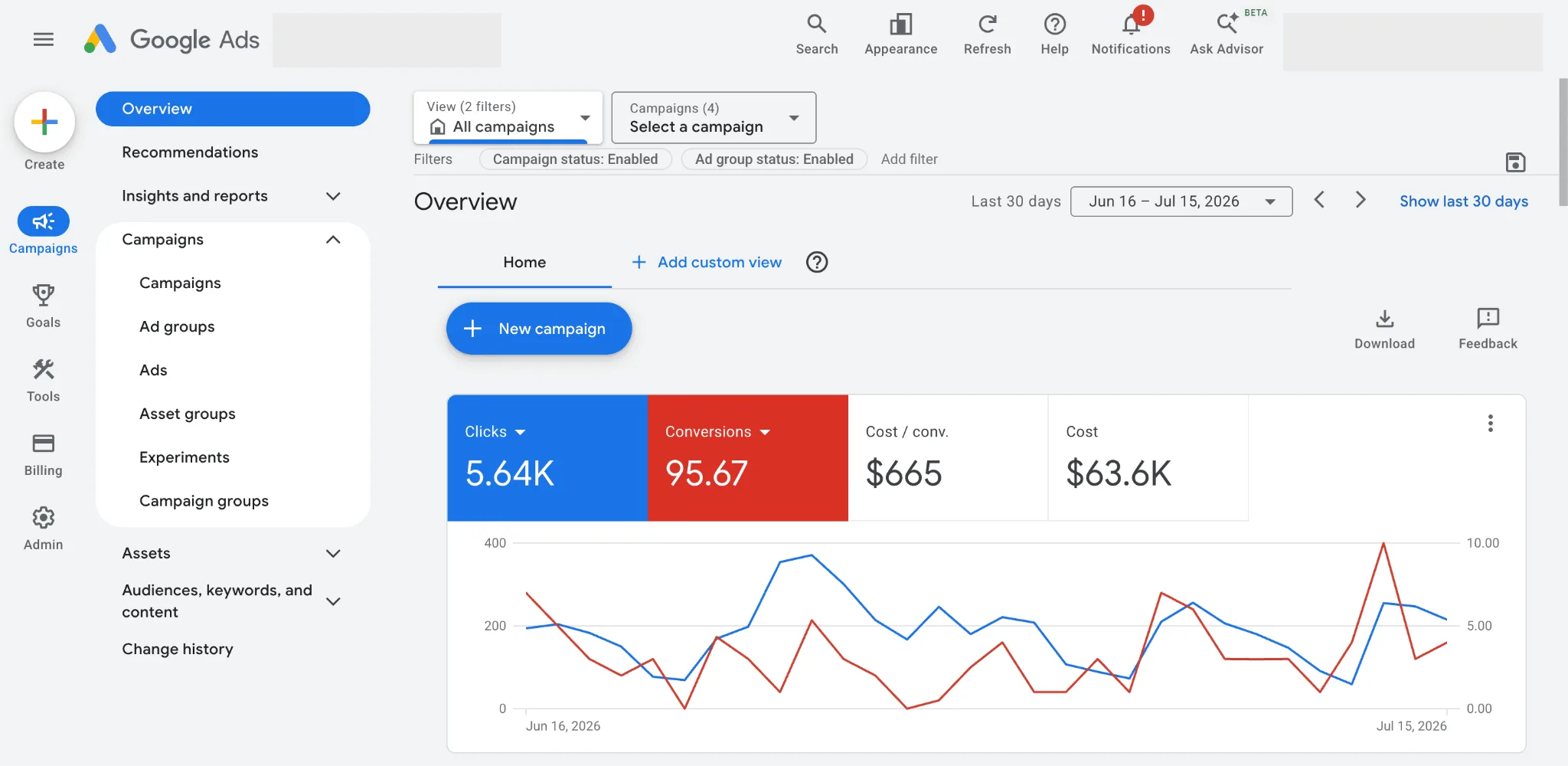
Google Ads is the better fit when there is real search volume behind your category, when the sales cycle is short, when ACV is on the lower end, and when the campaign is doing bottom-funnel work like demo requests, free trials, or branded and competitor search. In the accounts we manage, this is where Google consistently earns its keep: capturing people who already know your category and are comparing named vendors.
SnapLogic shows what the other end of the funnel looks like. Once we moved a bottom-funnel Google Search campaign to target ROAS bidding, opportunity volume rose 113% and MQL volume rose 102% within six months, delivering an 11x return on ad spend on the resulting opportunities. LinkedIn built the top of the funnel; Google converted what LinkedIn built.
A note on Google Demand Gen vs LinkedIn Ads for B2B: Demand Gen (Google's successor to Discovery Ads) adds lookalike and audience-signal-based reach across YouTube, Gmail, Discover, and Maps, and it is genuinely useful for B2B prospecting when you have strong video or visual creative. But it is still fundamentally an intent- and behavior-signal platform. Google is guessing at interest based on browsing and content-consumption patterns. LinkedIn is targeting by verified job title, seniority, and company data. That is a meaningfully different kind of precision, and it is why Demand Gen and LinkedIn are not really substitutes for each other, even though marketers sometimes talk about them as if they were.
- Advantages: captures buyers at the moment of intent, faster time to pipeline, straightforward last-click attribution.
- Downsides: competitive B2B keywords get expensive fast, and Google cannot reach a CFO who is not yet searching for a solution, no matter how well the campaign is built.
When does LinkedIn Ads win for B2B?
LinkedIn Ads wins for B2B when the buying decision involves multiple stakeholders who are not actively searching yet. In plain terms, LinkedIn is a paid advertising platform built around verified professional data (job title, seniority, company, industry), which makes it the most precise B2B targeting tool available anywhere in digital advertising. Typical CPCs run roughly $5 to $15, climbing toward the higher end for C-suite and competitive-industry targeting.
Why use LinkedIn Ads for B2B?
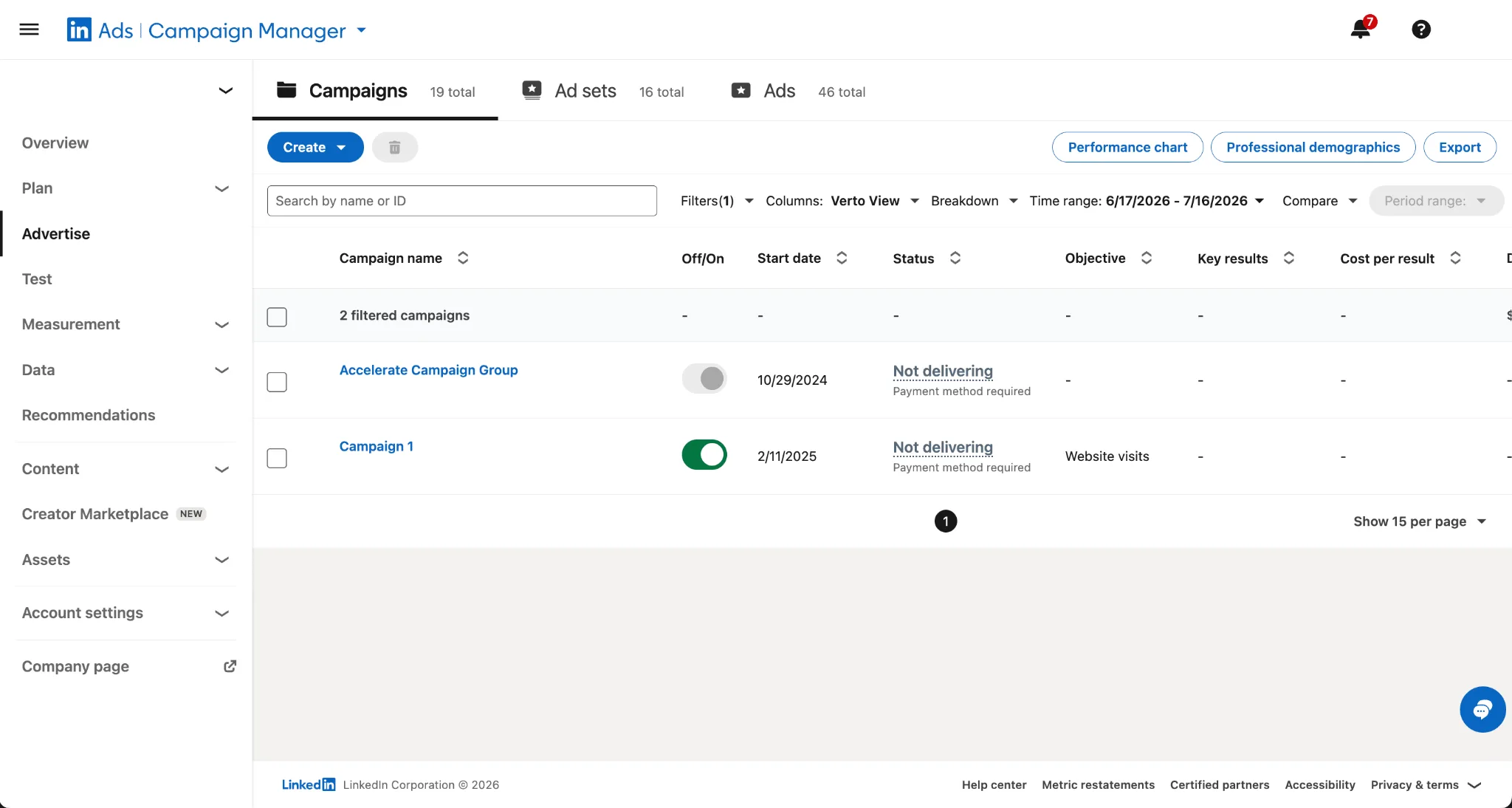
LinkedIn Ads works because it is the only major platform with reliable, self-reported professional targeting data. That lets you reach decision makers and the entire buying committee before they ever type a search query, which matters enormously for account-based marketing (ABM) against named target accounts.
One tactic worth stealing from practitioner forums: treat job titles like keywords. Build the list of titles you actually want, and just as importantly, negative out the titles you do not (interns, students, retirees) the same way you would negative out irrelevant search terms in Google Ads.
Who is LinkedIn Ads best for?
LinkedIn is best suited to enterprise software and other high-ACV categories, long consultative sales cycles, ABM programs targeting specific accounts, and thought-leadership plays built around webinars, reports, and gated content. If your buying committee looks like a VP, a director, and a couple of end users who all need to sign off before a contract gets signed, LinkedIn is built for exactly that scenario.
A widely cited framing in the B2B marketing community holds that only about 5% of your audience is actively in-market at any given moment. The other 95% are not searching yet, which means Google literally cannot see them. Reaching that 95% before they start searching is LinkedIn's job, not Google's.
That framing lines up with recent buyer-journey data. Dreamdata's 2026 LinkedIn Ads Benchmarks Report, built on more than 66 million B2B sessions and 3.5 million customer journeys, puts the average B2B buying journey at 272 days from first touch to closed deal, now involving an average of 10 stakeholders, up from 6.8 the year before.
The report also found that 81% of the B2B customer journey now happens before a deal ever enters the sales pipeline, almost entirely in a self-directed research phase. That is the gap LinkedIn is built to fill: reaching buyers during the seven-plus months they spend educating themselves before sales ever gets involved.
On format, the data is fairly one-sided. Document Ads and Thought Leader Ads (boosted posts from real employees rather than the company page) consistently outperform standard single-image ads. ZenABM's 2026 LinkedIn Benchmarks Report, based on an analysis of 119 Thought Leader Ads, found a 2.68% median click-through rate versus 0.42% for single-image ads. Lead gen forms, meanwhile, reliably lift conversion rates for gated content and webinar registrations because they remove the friction of leaving LinkedIn to fill out a form.
- Advantages: the most precise B2B targeting available, reaches the full buying committee, strong fit for ABM.
- Downsides: expensive CPCs relative to Google, lower raw CTR outside of Thought Leader and Document formats, longer attribution windows, and a real dependence on strong creative to avoid ad blindness.
LinkedIn Ads vs Google Ads: side-by-side comparison
Google wins on intent and speed. LinkedIn wins on targeting precision and account fit. The table below breaks down where each platform earns its budget.
| Factor | LinkedIn Ads | Google Ads |
|---|---|---|
| Best for | Demand generation | Demand capture |
| User intent | Not actively searching | Actively searching for solutions |
| Targeting | Job title, company, industry, seniority | Intent via search keywords |
| CPC (typical) | $5-$15+ | $2-$50+ by industry |
| Conversion speed | Longer cycles | Faster when intent exists |
| Lead quality | Higher for enterprise B2B | Depends on keyword quality |
| Lead volume | Lower | Higher |
| Scale | Limited audience | Massive search volume |
The 2026 benchmarks below are sourced from Dreamdata's 2026 LinkedIn Ads Benchmarks Report (66M+ B2B sessions, 3.5M customer journeys, closed-won attribution over a 12-month window) and Lunio's 2026 Global Invalid Traffic Report (2.7B+ paid clicks analyzed).
| Metric | LinkedIn Ads | Google Search |
|---|---|---|
| Median ROAS (2025) | 121% | 67% |
| Top-quartile ROAS | 279% | 138% |
| Cost per company influenced | ~$82 | ~$129 |
| Invalid traffic (IVT) rate | 19.88% | 7.57% |
| Share of B2B ad budgets | 41% | 46% (Google Network) |
Note: these are aggregate benchmarks, not guarantees; your account's numbers will vary by industry, creative, and targeting discipline.
How should you split the budget between LinkedIn and Google Ads?
Split budget by three variables: search volume, ACV, and sales cycle length. None of these decisions should be made on gut feel alone.
- High search volume (1,000+ monthly searches): ~60% Google / 40% LinkedIn. Demand already exists, so capture it first and use LinkedIn to build the pipeline behind it.
- Low volume or an emerging category: ~30% Google / 70% LinkedIn. If nobody is searching yet, you have to educate the market before Google has anything to capture.
- High-ticket deals ($50k+ ACV): ~70% LinkedIn / 30% Google. The premium CPC is easily justified when a single closed deal covers months of ad spend.
Budget tiers we typically see work in practice: starting out ($2k-$5k/month, roughly 70/30 Google-led while the category is still being validated), growth ($10k-$30k/month, closer to 60/40 as LinkedIn ABM starts to pay off), and enterprise ($50k+/month, a more balanced split with dedicated budget for retargeting and format experimentation).
"Clients almost always come to us wanting a winner between LinkedIn and Google. The more useful question is what job each platform is doing for you right now. If your pipeline is thin and your category has real search volume, Google should be doing most of the heavy lifting. If your deals are big and your buyers aren't searching yet, LinkedIn has to go first, because Google can't capture demand that doesn't exist."
VertoDigital, Paid Media StrategyOne honesty note worth flagging: some agencies quote inflated "minimum" LinkedIn budgets to steer clients toward bigger retainers. LinkedIn's actual platform floor is $10 per day, though in the accounts we manage, campaigns rarely produce usable data below roughly $50-$100 per day, simply because LinkedIn's algorithm needs enough volume to exit its learning phase.
The two channels also do genuinely different jobs across the funnel, which is worth mapping out explicitly. LinkedIn: awareness, then a report download, then a webinar, then a case study, then a demo request. Google: search, then a landing page, then a demo request, then a sales call. Neither funnel replaces the other. They are built for different starting points in the buyer's journey.
How do you stop wasting your LinkedIn budget?
Most wasted LinkedIn spend comes from broad targeting and unfiltered Audience Network placements, not from the platform being inherently inefficient. Lunio's 2026 Global Invalid Traffic Report, based on more than 2.7 billion paid clicks analyzed across major platforms, found LinkedIn's average invalid traffic rate at 19.88%, compared with 7.57% for Google.
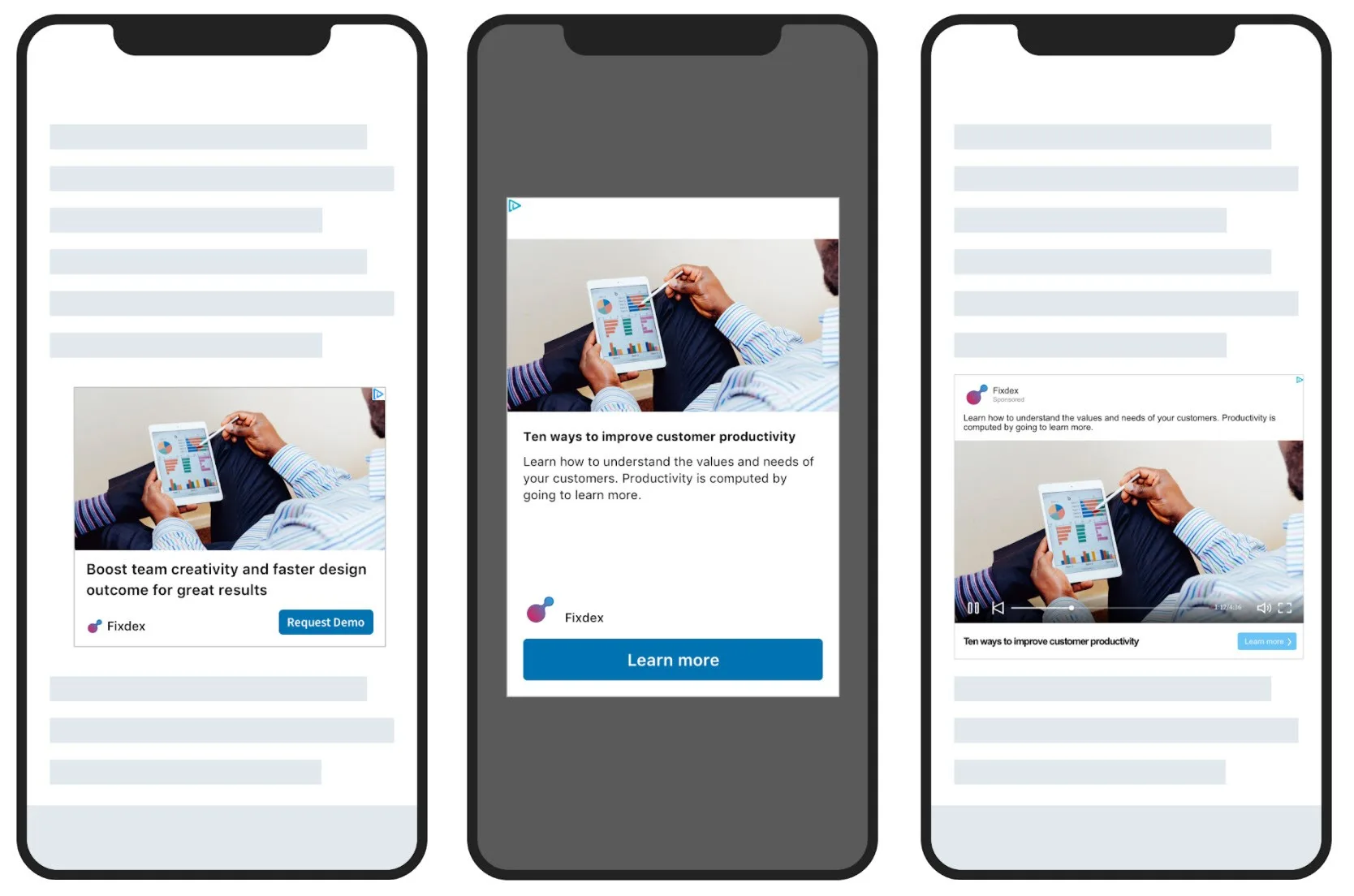
Structurally, that gap is driven in large part by lead gen form abuse and audience network expansion settings that push ads onto lower-quality off-platform inventory.
Here's the checklist we run on every LinkedIn account:
- Turn off the Audience Network / publishing partners. This is the single biggest source of wasted spend on the platform, and it is an opt-out, not a default-off setting.
- Exclude unemployed and retired members from your targeting. They pass LinkedIn's targeting filters but will never buy.
- Lock down geo-targeting and explicitly exclude countries outside your actual sales territory.
- Layer targeting with AND logic, never single-dimension. Job title alone, industry alone, or Interests alone will pull in far too broad an audience. Stack company size, seniority, and function together.
- Verify real landing-page traffic in GA4 against LinkedIn's own reported clicks. An ad click and a landing-page pageview are not the same thing, and the gap between them is often where the fraud hides.
- Consider manual bidding set slightly below LinkedIn's recommended CPC, especially on daily budgets under $100, to prevent the algorithm from burning through spend on the most expensive early clicks.
For the full diagnostic version of this checklist, worked in order, see our LinkedIn Ads CPL playbook - it walks through the same fixes with the sequence that typically produces a 40-60% CPL reduction in 60 days.
Why does last-click attribution undercredit LinkedIn?
Last-click attribution undercredits LinkedIn because of how B2B buyers actually behave: they see a LinkedIn ad, get curious, and then open a new tab to search Google for the company name or category. When that search converts, last-click attribution hands 100% of the credit to Google and zero credit to the LinkedIn touch that actually started the journey.
The fix is not to abandon measurement, it is to use better measurement. A self-reported attribution field on your lead forms ("How did you hear about us?") is the cheapest starting point. LinkedIn's Conversions API (CAPI) is the more rigorous fix: it feeds offline pipeline and revenue data from your CRM back into LinkedIn, and according to a LinkedIn-cited internal study in Dreamdata's 2026 report, CAPI adopters see a 20% reduction in cost per action and a 31% increase in attributed conversions compared with standard tracking. Multi-touch attribution models go further still, spreading credit across every touchpoint in the journey rather than crowning a single winner.
This shows up in practice, not just in theory. When Cribl ran a LinkedIn brand awareness push ahead of its lead gen campaigns, remarketing cost per lead fell 31% and conversion rate rose 14%, and branded Google search volume climbed 23% year over year. Judged purely on LinkedIn's own last-click numbers, that awareness spend looks like a cost center. Judged on what happened in Google Search four weeks later, it was the thing driving the lift.
This is also why judging LinkedIn purely on 30-day last-click ROAS is misleading. Reframe the measurement window around the deal cycle, not the ad platform's default reporting window, and LinkedIn's real contribution tends to look meaningfully stronger.
Who should NOT use each channel?
Skip LinkedIn if your buyers genuinely do not live there, and skip Google if your category has no real search demand yet. Neither platform is a universal fit, and pretending otherwise is how the budget gets wasted.
- Skip LinkedIn if: your buyers are local, trades-based, or blue-collar audiences who are not professionally active on the platform, or if your ACV is too thin to absorb LinkedIn's premium CPCs.
- Skip Google if: your category is genuinely new and nobody is searching for it by name or function yet. There is no demand to capture if no one is looking.
- Use both, carefully, if: you're enterprise, deals run $10k-$20k+, and the motion is sales-led. That is the scenario where a real split, not a single-platform bet, earns its complexity.
Top mistakes we see on each platform. On Google, broad match with no negative keyword list, optimizing toward raw form fills instead of qualified leads, and running with no brand campaign at all. On LinkedIn, targeting too broad an audience, relying on single-image creative exclusively, and judging performance on 30-day last-click numbers alone.
Which should you choose?
The short version: choose based on whether your buyers are already searching, how long your sales cycle runs, and how much of your budget you can commit to each platform for at least a full quarter.
- Choose Google if: your buyers are already searching, you need pipeline fast, and your ACV is on the lower end.
- Choose LinkedIn if: you're targeting specific senior roles, running a long consultative cycle, or executing ABM against named accounts.
- Use both if: you're an enterprise, running a sales-led motion, and deals regularly clear $10k+.
Whichever mix you land on, running it well depends on execution quality as much as channel choice. If you're evaluating outside help for the LinkedIn side, see our guide to how to select a certified LinkedIn Ads agency.
FAQ
Is LinkedIn Ads or Google Ads better for B2B?
Neither is universally better. Google wins when buyers are already searching and you need pipeline fast; LinkedIn wins when you need to reach a specific buying committee before they start searching. Most B2B companies need a split of both, weighted by ACV and sales cycle.
Which should I start with on a small budget?
Start with Google if there is real, measurable search volume in your category. It generally produces usable pipeline data faster on a limited budget than LinkedIn does.
What is the minimum LinkedIn Ads test budget?
LinkedIn's platform floor is $10 per day, but campaigns rarely generate enough data to optimize below roughly $50-$100 per day.
Google Demand Gen vs LinkedIn Ads: which for awareness?
Both build awareness, but they work differently. Demand Gen uses behavior and lookalike signals across YouTube, Gmail, and Discover; LinkedIn uses verified job title and company data. For precise B2B account targeting, LinkedIn is the more direct tool.
Are LinkedIn lead gen forms worth it?
Generally yes for gated content and webinar registrations, since they remove the friction of leaving LinkedIn. Pair them with CRM-level lead verification, since native lead gen forms are also a common target for fraudulent submissions.
The right LinkedIn-to-Google ratio depends on your search volume, ACV, and sales cycle - and on measurement that credits each channel fairly. Get a bespoke read on where your budget should go.
Free Pipeline Assessment