Making AI Work Like Part of Your Marketing Team: How We Built VertoBrain
A behind-the-scenes look at VertoBrain, our shared knowledge base connected to Claude: how we built it, how the team uses it every day, and what any marketing team can copy.
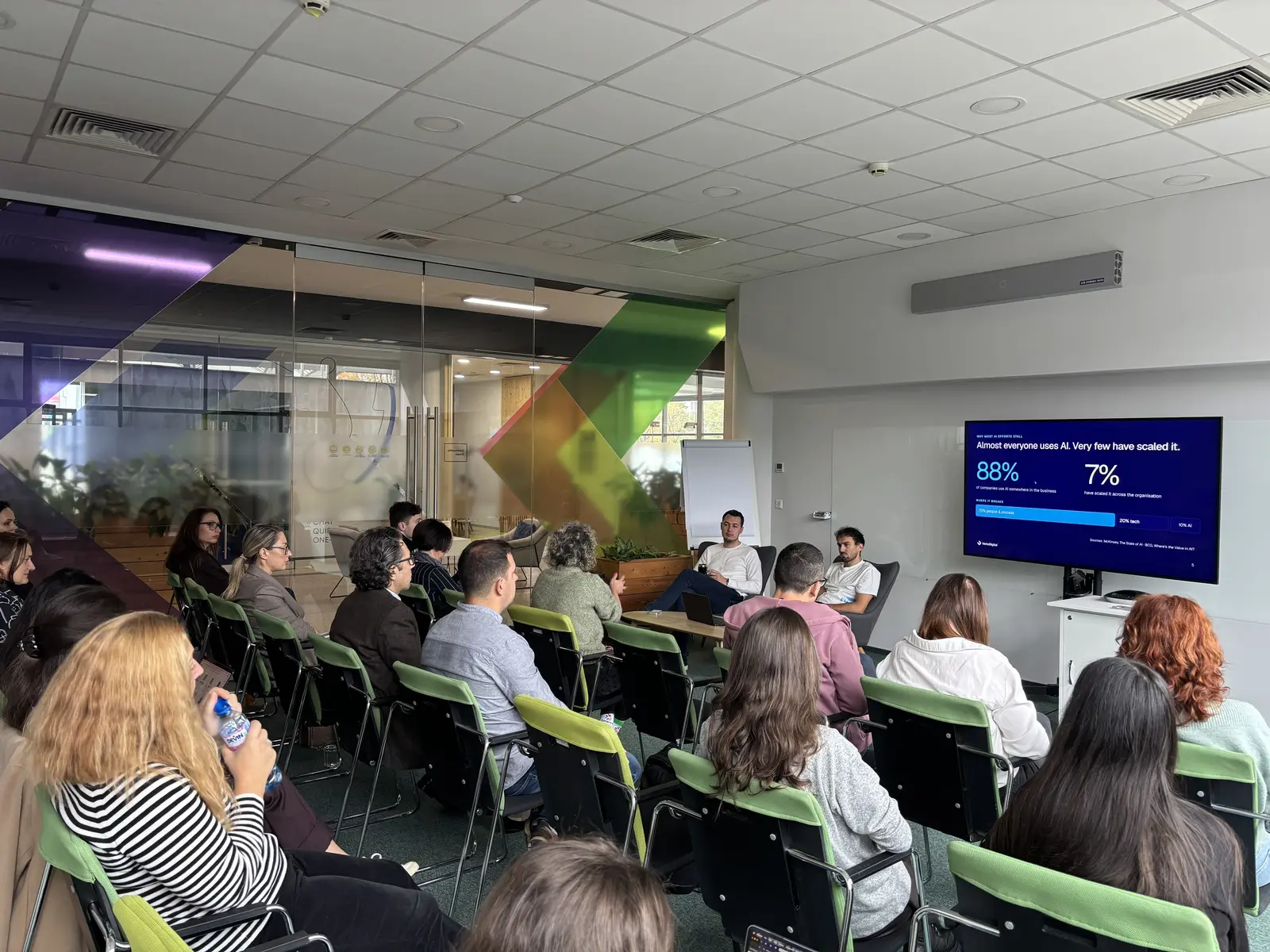
Who spoke


Claude is only as useful as what it can see and what it has been taught. Without your real data and your team’s know-how, even a strong model gives confident, wrong answers.
Build from real work, not from a library. More than 80% of the skills and plugins we started with, taken from online libraries and generic ideas, are hardly used. The ones people use came from weekly tasks, built with the people who do them.
Start small and keep it current. Connect your tools, write down how the work is done with the reason behind each step, and give every skill an owner. For us, upkeep takes 1 to 2 hours a week.
What the session covered
Using an AI tool and having one that works like part of your team are two different things. At VertoTalks #26, we showed how we closed that gap with VertoBrain, our shared knowledge base connected to Claude, and what any marketing team can copy from it.
The starting point: a strong model with half the context gives you confident, wrong answers. So the job is to give Claude what you’d give a smart new hire on day one.
We walked through six parts, each with what we have and how to do it yourself:
- The facts - one connector in front of 16 data sources: ads, analytics, search, CRM and our own knowledge. It confirms the client first, then routes the request to the right source. Your version: connect every tool you use, and test what each one sends back before you rely on it.
- The know-how - skills built from workflows people already ran. Your version: write the reason next to every step, so juniors learn the why and Claude spots the case that doesn’t fit.
- Shared language - client names resolve to their accounts, and skills are named after deliverables like audit, brief, dashboard and QBR. People ask Claude the way they’d ask a colleague.
- Repeatable work - routines that run on their own. On our internal platform, ai.vertodigital.com, someone fills in a short form and gets a near-finished audit and a deck to download. Your version: turn your best session into a skill, and schedule it once it’s stable.
- Guardrails - read-only access, personal data removed, and checks Claude has to report before it delivers. Every deliverable comes with its working.
- Upkeep - a weekly agent keeps the docs current. Use live connectors over uploaded files, and give every skill a named owner.
So, did it work? VertoBrain now serves our team of 50, with 40+ people using it every day. An audit that takes weeks by hand comes back near-finished in 15 to 50 minutes.
If you want to see how we use Claude elsewhere, read our recap of how we rebuilt our website with Claude Code, or Content AI Automations That Actually Work for the content side.
Who spoke
Your host

Any questions about this session or future VertoTalks? Reach out to Nikol directly.
Get notified about upcoming VertoTalks sessions - subscribe to our calendar and never miss a session.
Subscribe to calendar